
If you’ve ever searched “how to build backlinks,” you’ve probably run into a mountain of shortcuts — buy this package, join that link network, get 50 backlinks overnight. Ignore all of it.
Search engines have spent two decades getting better at spotting manipulated links, and in 2026, AI-driven search (Google’s AI Overviews, ChatGPT, Perplexity) makes trust signals matter even more, not less. White hat link building — earning backlinks through genuine value instead of manipulation — remains the only strategy that compounds instead of eventually collapsing.
This guide breaks down exactly what white hat link building is, why it works, and how to build a repeatable system for earning high-quality backlinks without ever risking a Google penalty.
What Is White Hat Link Building?
White hat link building is the practice of acquiring backlinks through ethical, Google-approved methods — creating valuable content, building real relationships, and earning links because other sites genuinely want to reference you.
It sits in direct contrast to black hat link building, which relies on manipulation: buying links, joining private blog networks (PBNs), running link exchanges, or automating spammy links across thousands of low-quality sites.
The difference isn’t just philosophical — it’s practical. Google’s algorithms (and its human spam-fighting teams) are explicitly designed to detect and penalize manipulative link patterns. A site caught with a black hat link profile can lose most of its organic traffic overnight, sometimes for months or years.
White hat link building takes longer and requires real effort, but the links you earn are durable. They don’t disappear in the next algorithm update, and they carry genuine referral traffic on top of the SEO benefit.
Why Backlinks Still Matter in the Age of AI Search
Some marketers assume backlinks are becoming irrelevant as AI chatbots and generative search take over. The opposite is true.
Search engines — and increasingly, AI systems — use backlinks as a trust signal. When multiple credible, relevant websites link to your content, it tells Google (and tools like ChatGPT or Google’s AI Overviews) that your information has been vetted by others in your field. This is closely tied to Google’s E-E-A-T framework: Experience, Expertise, Authoritativeness, and Trustworthiness.
A page with strong, relevant backlinks is more likely to:
- Rank higher in traditional search results
- Get pulled into AI Overviews and featured snippets
- Be cited as a source by AI chatbots doing “generative engine optimization” (GEO) style retrieval
- Receive direct referral traffic from readers of the linking site
In other words, link building isn’t a legacy SEO tactic — it’s foundational infrastructure for how your brand gets discovered across every modern search surface.
White Hat vs. Black Hat vs. Gray Hat Link Building
It helps to think of link building tactics on a spectrum rather than two hard categories.
| Approach | Example Tactics | Risk Level | Long-Term Value |
|---|---|---|---|
| White Hat | Original research, digital PR, guest posts on relevant sites, broken link reclamation | Low — aligned with Google’s guidelines | High — durable rankings and referral traffic |
| Gray Hat | Bulk guest post networks, reciprocal link exchanges, low-effort directory submissions | Medium — technically against guidelines but common | Inconsistent — works until it doesn’t |
| Black Hat | Paid links without disclosure, PBNs, comment spam, hidden links, expired domain abuse | High — actively penalized | Low — short bursts followed by ranking collapse |
Many businesses drift into gray hat territory without realizing it — for example, guest posting purely to place a keyword-stuffed link rather than to genuinely inform a publication’s audience. The safest rule: if the tactic exists purely to manipulate a ranking signal rather than to help a real reader, it’s not white hat.
What Makes a Backlink Actually Valuable
Not all backlinks are created equal. Before investing time in any link building strategy, understand the factors that determine whether a link will actually move the needle:
- Domain authority and trust: A link from an established, reputable publication carries far more weight than one from an obscure, low-traffic blog.
- Topical relevance: A backlink from a site covering your industry is more valuable than one from an unrelated niche, even if that unrelated site has higher authority.
- Placement: Links embedded naturally within the body content of an article are weighted more heavily than links buried in a footer, sidebar, or author bio.
- Anchor text: Descriptive, natural anchor text that matches the linked page’s topic helps both users and search engines understand context — but over-optimized, keyword-stuffed anchor text is a red flag.
- Referring domain diversity: Ten backlinks from ten different reputable domains are worth significantly more than fifty backlinks from the same five sites.
- Traffic behind the link: A backlink on a page that actually gets visited sends real referral traffic and signals genuine value, unlike a link buried on a page no one reads.
Understanding these factors helps you prioritize where to spend your outreach energy instead of chasing volume for its own sake.
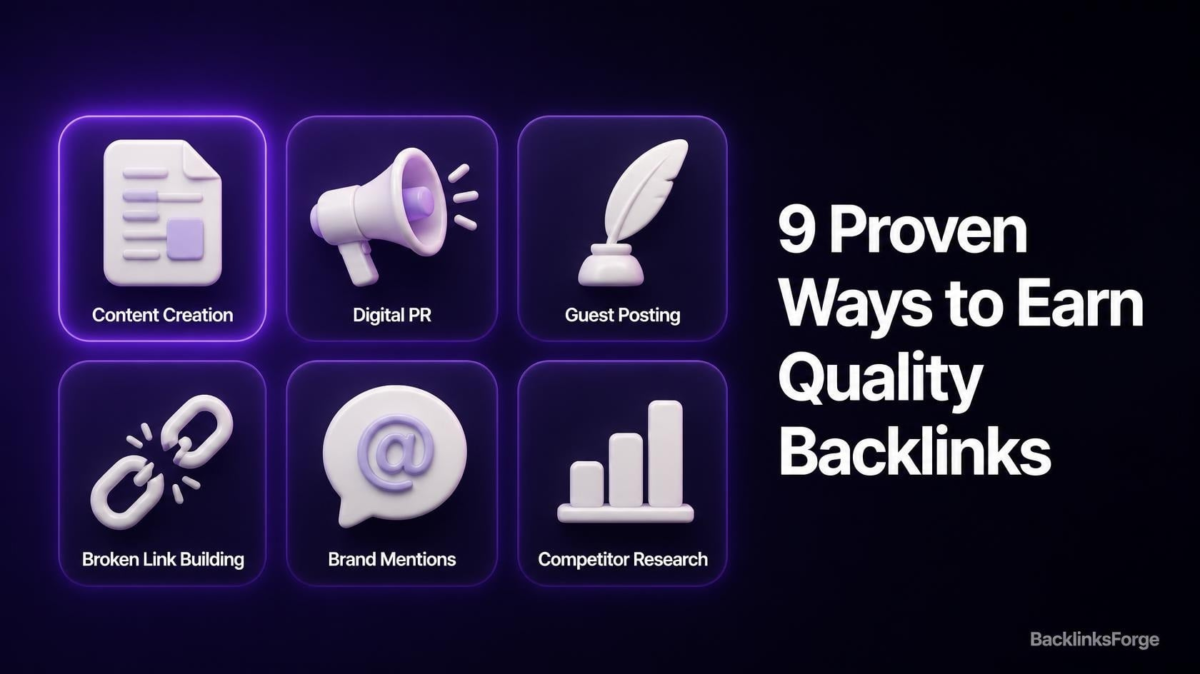
9 White Hat Link Building Strategies That Actually Work
1. Publish Content Worth Linking To
This is the foundation everything else builds on. No outreach template can compensate for mediocre content. The types of content that consistently earn organic backlinks include:
- Original research, surveys, or proprietary data
- Comprehensive guides that are genuinely more useful than what already ranks
- Free tools, calculators, or templates
- Visual assets like data-driven infographics or custom charts
- Case studies with real numbers and outcomes
Before publishing, ask: would an editor at a relevant, respected site actually want to cite this? If the honest answer is no, the content needs more depth, better data, or a sharper angle.
2. Digital PR and Journalist Outreach
Digital PR means actively pitching your expertise, data, or commentary to journalists and industry publications rather than waiting to be found. Platforms like Featured (formerly Terkel) and Qwoted connect you with reporters looking for expert quotes, and proactive pitching to niche industry writers with a genuinely newsworthy data point or contrarian insight can land powerful, high-authority backlinks.
The key is offering real value to the journalist’s audience — not a sales pitch. Editors can spot self-promotion instantly, and it damages your credibility for future pitches.
3. Strategic Guest Posting
Guest posting still works when done correctly — the key word being strategic. Instead of mass-producing generic articles for any site that accepts them, focus on:
- Publications your actual target audience reads
- Sites with real traffic, editorial standards, and topical relevance to your niche
- Genuinely useful articles, not thinly veiled advertisements with a link stuffed into the bio
One well-placed, high-quality guest post on a respected industry site is worth far more than a dozen placements on low-authority content farms that exist purely to sell links. This is also where working with an experienced link building partner pays off — someone who already has relationships with editors at relevant, high-authority publications can secure placements that would take months to build from scratch.
4. Broken Link Building (Link Reclamation)
Every website accumulates dead links over time — pages get deleted, URLs change, companies shut down. Finding these broken links on relevant, authoritative sites and suggesting your own content as a replacement is a classic white hat win-win: you help the site owner fix a problem, and you earn a natural, relevant backlink.
Tools that crawl backlink and broken-link data can surface these opportunities. The outreach email should be short, specific about which link is broken, and helpful in tone — not demanding.
5. Turn Unlinked Brand Mentions Into Links
If your brand, product, or research is mentioned online without a link, that’s a low-friction opportunity. Set up Google Alerts or use a monitoring tool to find these mentions, then reach out politely asking the site owner to add a link back to your page for their readers’ benefit.
6. Reverse-Engineer Competitor Backlinks
Analyze where your closest competitors are earning their backlinks. Look for patterns: which publications link to multiple competitors in your space? What type of content — guides, data reports, tools — attracts the most links? This research doesn’t just generate a prospect list; it reveals content gaps you can fill better than anyone currently ranking.
7. Leverage Genuine Business Relationships
Partners, suppliers, clients, industry associations, and event sponsors are an underused source of high-trust backlinks. A mention on a partner’s “who we work with” page, a joint case study, or a listing in a trade association directory reflects a real relationship — nothing manipulative about it, and these links are often overlooked simply because they require a conversation rather than a mass email campaign.
8. Participate Authentically in Niche Communities
Forums, Reddit communities, and Quora threads related to your industry have grown significantly in visibility, especially in AI-generated search summaries. Genuinely helpful participation — answering questions, sharing real experience, linking to a resource only when it’s actually relevant — builds reputation and occasionally earns links (even if many forum links are “nofollow,” the referral traffic and brand visibility are real).
9. Create Linkable Data and Original Research
Original surveys, industry benchmark reports, and proprietary datasets are link magnets because journalists and bloggers need sourced statistics. If you can produce even a modest survey of 100-200 relevant respondents once or twice a year, you create a renewable, defensible source of high-authority backlinks that competitors can’t simply copy.
A Real-World Example: How Small Sites Earn Big Links
Theory is easy — execution is where most link building efforts stall. Here’s a realistic scenario that shows how these strategies play out together.
A mid-sized SaaS company selling inventory management software had almost no backlinks outside its own directory listings. Instead of chasing volume, the team picked one strategy at a time:
- They ran a small original survey (around 150 respondents) on inventory shrinkage in small retail businesses — a topic with almost no recent data available.
- They pitched the findings to five industry newsletters and two retail trade publications, offering an exclusive first look at the data.
- Three publications covered it, each linking back to the original report as the data source.
- They then used those three citations as social proof in guest post pitches to two additional retail blogs, which accepted contributed articles referencing the same research.
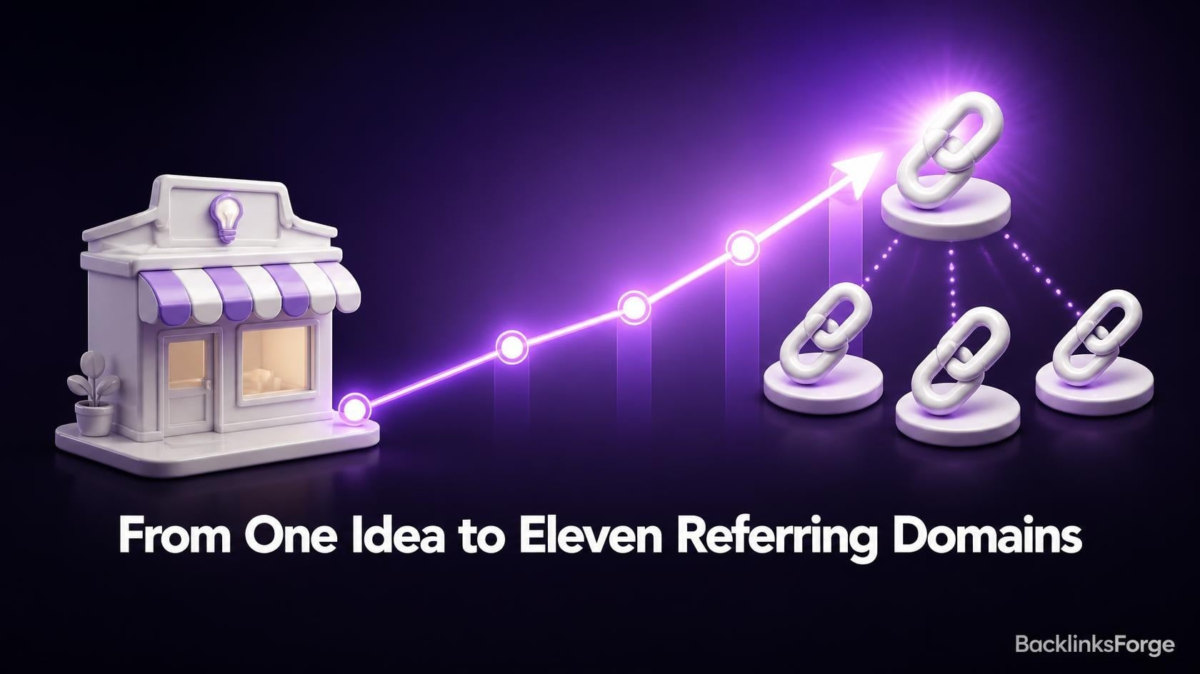
Within four months, this single piece of original research generated eleven referring domains — all topically relevant, all earned without payment or exchange. That’s the compounding effect of white hat link building: one well-executed asset can open several doors at once, rather than requiring a new campaign for every single link.
The lesson isn’t “run a survey” specifically — it’s that a genuinely useful, original asset gives you something real to offer in outreach, instead of asking for a favor with nothing to trade.
Building a Repeatable White Hat Link Building System
Random, one-off outreach rarely produces consistent results. A sustainable process looks like this:
Step 1: Audit your current backlink profile. Understand your total referring domains, the authority and relevance of your existing links, and your link velocity (how quickly you’re gaining or losing links). A sudden, unnatural spike in links is a red flag to search engines — steady, diverse growth is the goal.
Step 2: Build a qualified prospect list. Use competitor backlink analysis and niche research to compile a list of relevant, authoritative sites. Filter out low-traffic, low-relevance, or spammy domains before spending any outreach effort.
Step 3: Create or refine link-worthy assets. Match your content to the opportunities you found — if data-driven posts are earning the most links in your niche, prioritize original research over generic listicles.
Step 4: Run personalized, patient outreach. Generic mass emails get ignored or marked as spam. Reference specific details about the recipient’s content, explain the genuine value to their readers, and follow up politely without pressure. Expect a low response rate — this is normal, not a sign the strategy is broken.
Step 5: Track, measure, and refine. Monitor which content types, outreach angles, and target sites convert into actual placements, then double down on what’s working.
Black Hat Tactics to Avoid Entirely
To stay safely on the white hat side of the line, avoid:
- Buying links without proper
rel="sponsored"orrel="nofollow"disclosure - Private blog networks (PBNs) built solely to funnel authority to a target site
- Reciprocal link schemes or three-way link exchanges designed purely to manipulate rankings
- Comment and forum spam with links dropped indiscriminately
- Hidden links invisible to human visitors but readable by crawlers
- Mass, irrelevant directory submissions with no topical connection to your business
Even when competitors seem to get away with these tactics temporarily, the downside risk — a manual action or algorithmic penalty that erases years of ranking progress — is rarely worth the short-term gain.
Should You Outsource Link Building?
Legitimate white hat link building services exist, and for many businesses, working with an experienced team is far more efficient than building an in-house outreach operation from scratch. But the market is also full of agencies quietly running gray or black hat tactics behind a “white hat” label.
Before hiring anyone, ask to see:
- Sample outreach emails and real placement examples
- Names of past clients and their current backlink profiles (a quick check reveals whether links came from relevant, authoritative sites or spam networks)
- Their process for vetting publications before pitching
Be especially cautious of anyone promising guaranteed rankings, instant results, or suspiciously low prices for “high-authority” placements — genuine white hat link building is manual, relationship-driven work, and it simply cannot be mass-produced cheaply.
Frequently Asked Questions
How long does white hat link building take to show results? Most businesses start seeing measurable ranking improvements within 3-6 months of consistent effort, though this varies by industry competitiveness and starting domain authority.
How many backlinks do I need to rank? There’s no fixed number — quality and relevance matter far more than quantity. A handful of links from highly relevant, authoritative sites will outperform hundreds of low-quality links.
Is guest posting still considered white hat in 2026? Yes, as long as it’s done selectively on relevant, editorially rigorous sites with genuinely useful content — not mass-produced placements on sites that exist purely to sell links.
Can I do white hat link building without a big budget? Absolutely. Broken link reclamation, unlinked mention outreach, and digital PR through source-request platforms cost time rather than money, making them accessible for smaller businesses.
The Bottom Line
White hat link building isn’t the fastest path to more backlinks — but it’s the only one that doesn’t come with a ticking clock attached. Every strategy above relies on the same underlying principle: create something genuinely worth linking to, then have honest conversations with the people who can link to it.
Do that consistently, and your backlink profile becomes an asset that compounds over years rather than a liability waiting to be discovered by the next algorithm update.