
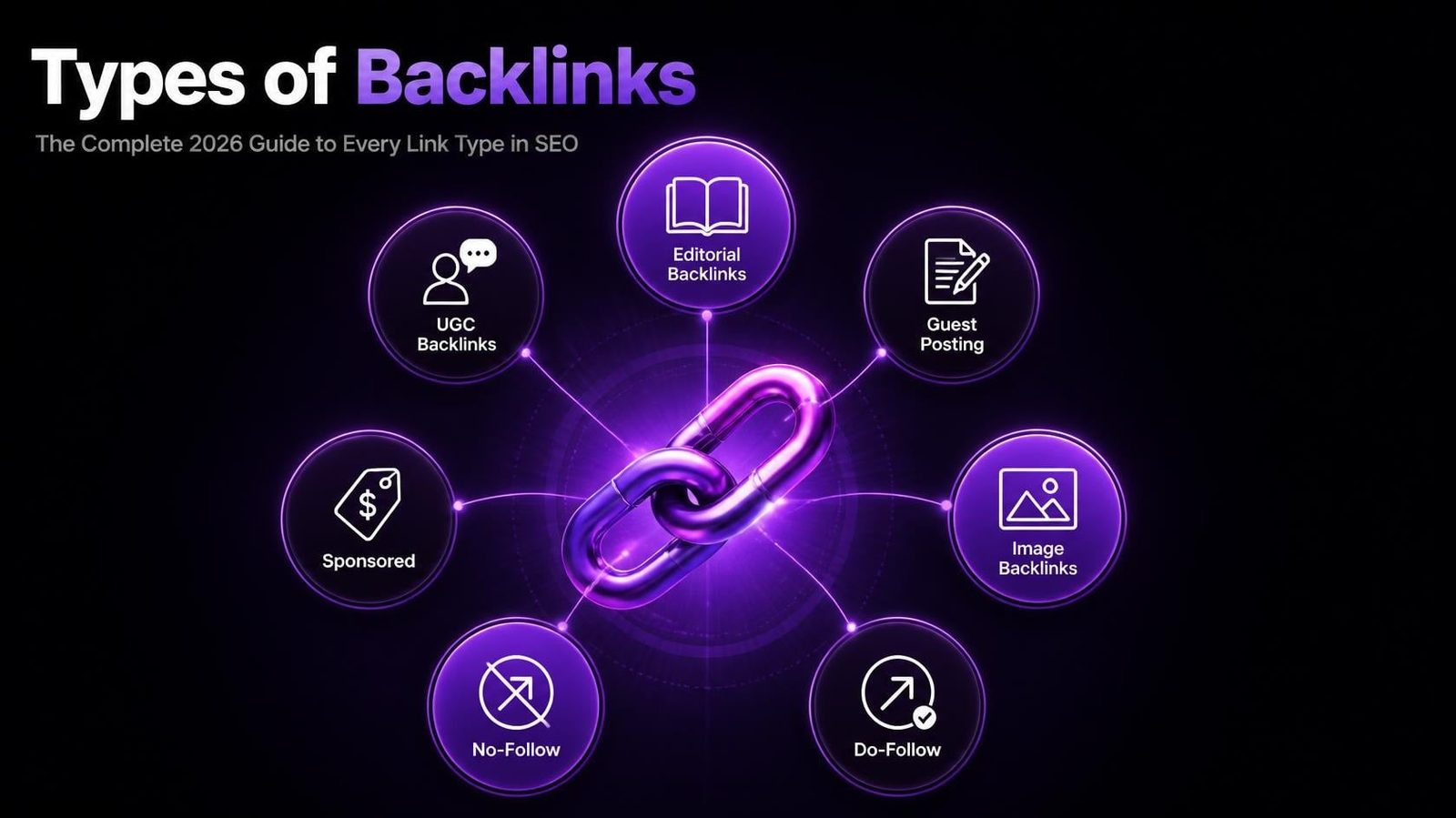
Backlinks remain one of the strongest ranking signals in modern SEO, but not every link pointing to your website carries the same weight. Some backlinks push your rankings up, some do nothing at all, and a few can quietly get your site penalized. If you’re building a link building strategy, off-page SEO plan, or a guest posting campaign, understanding the different types of backlinks — and how search engines like Google interpret each one — is the difference between a healthy backlink profile and a wasted budget.
In this guide, we’ll break down backlinks by HTML attribute, by acquisition method, and by real-world SEO value, so you know exactly which link types are worth chasing in your link acquisition strategy.
What Is a Backlink?
A backlink (also called an inbound link or incoming link) is any hyperlink from one website that points to a page on another website. When Site A links to Site B, Site B receives a backlink. Search engines treat these links as votes of confidence — the more relevant, authoritative referring domains that link to your content, the more trustworthy and worthy of higher rankings your page appears.
But volume alone doesn’t win rankings anymore. Google’s algorithms now weigh link relevance, domain authority, anchor text diversity, and the natural placement of a link within content far more heavily than raw backlink count. That’s why understanding link types — not just link quantity — is essential for any serious SEO or link building campaign.
Backlink Types by HTML Attribute
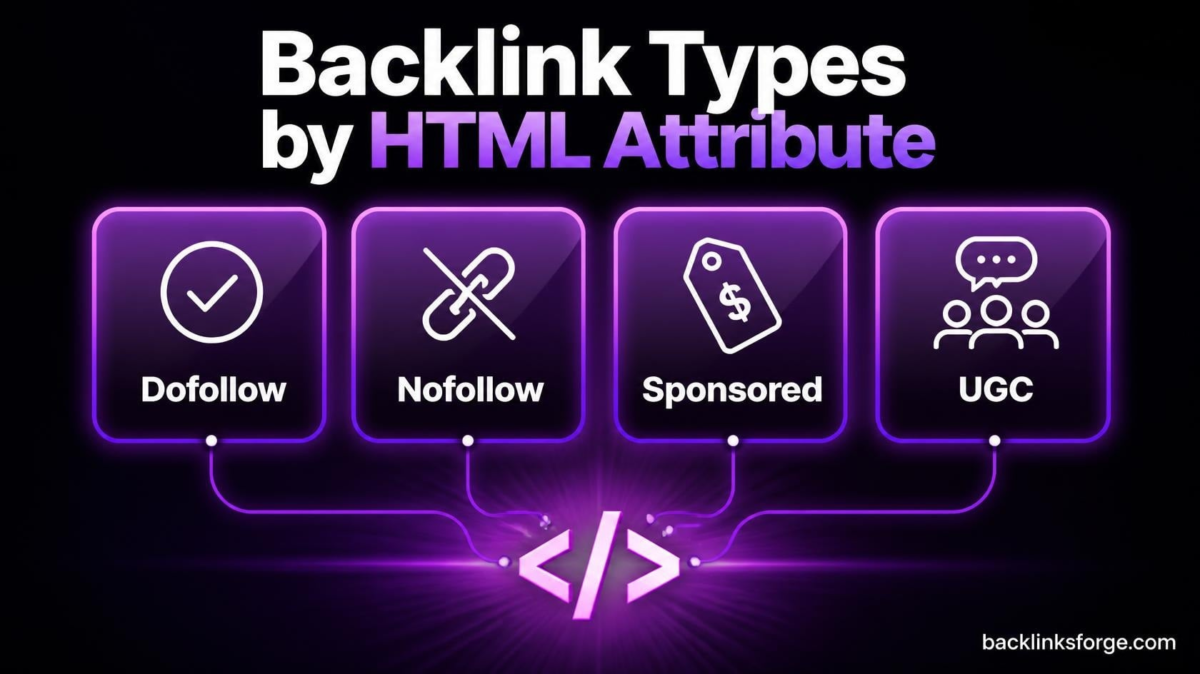
Every backlink carries an underlying HTML “rel” attribute that tells search engines how to treat it. This is the most technical, but also the most fundamental, way to classify links.
1. Dofollow Backlinks
A dofollow link is the default type of hyperlink — it contains no rel attribute discouraging search engines from following it. Dofollow backlinks pass “link equity” (often called link juice) from the linking page to the destination page, and they’re the primary type of link that influences domain authority and keyword rankings. When SEOs talk about “getting quality backlinks,” they almost always mean dofollow, contextual backlinks from relevant, authoritative sites.
2. Nofollow Backlinks
Introduced originally to fight comment spam, a nofollow link carries rel="nofollow" and tells search engines not to pass ranking credit through it. Google has since clarified that nofollow is treated as a “hint” rather than a strict directive, meaning nofollow links can occasionally still be crawled and considered in aggregate. They’re common on comment sections, forums, and many guest post author bios.
3. Sponsored Backlinks
Any link inserted as part of a paid partnership, sponsored content deal, or affiliate arrangement should carry rel="sponsored". This tag flags the link as a paid placement rather than an organic editorial endorsement, so search engines generally exclude it from ranking calculations — but it keeps your site compliant with Google’s link scheme guidelines.
4. UGC (User-Generated Content) Backlinks
Links embedded inside content that ordinary users create — forum replies, blog comments, community posts, Q&A answers — should use rel="ugc". This attribute helps search engines separate genuine editorial endorsements from links that site owners don’t fully control, which reduces the risk of comment-spam links being weaponized against a site’s link profile.
Backlink Types by Acquisition Method
Beyond HTML markup, SEOs classify backlinks by how they were earned. This framework matters because Google’s spam policies are built around detecting unnatural link acquisition patterns.
5. Natural (Organic) Backlinks
These are links other webmasters add voluntarily because they genuinely found your content valuable — no outreach, no payment, no request involved. Natural backlinks are the gold standard of white-hat SEO because they’re the hardest to fake and the strongest trust signal search engines can find. Publishing original research, in-depth guides, tools, or data studies is the most reliable way to earn these organically.
6. Manual (Outreach-Based) Backlinks
Manual link building involves actively reaching out to website owners, bloggers, journalists, or editors to request a link — through guest posting, broken link building, digital PR pitches, or resource page suggestions. These links require effort and relationship-building, but they’re fully within Google’s guidelines when the outreach centers on genuine relevance rather than manipulation.
7. Self-Created Backlinks
Self-created links are ones you place yourself — in forum profiles, blog comments, online directories, press release distribution sites, or unmoderated wikis. A handful of legitimate self-created links (like a business directory listing) are normal and harmless. But mass self-created links at scale is a classic black-hat link building tactic that search engines actively penalize.
High-Value Backlink Types Worth Pursuing
Editorial Backlinks
Editorial links are placed naturally within the body of an article by a publisher or journalist because your content, data, or expertise adds value to their story. These are considered the most powerful backlink type because they carry genuine third-party endorsement, strong topical relevance, and typically come from high domain authority publications.
Guest Post Backlinks
Guest posting — contributing an article to another site in your niche in exchange for a contextual backlink — remains one of the most scalable and controllable link building tactics available, especially through structured guest post outreach and link building services. The key to making guest post backlinks effective is prioritizing topical relevance and editorial quality over sheer link volume, and securing placements on sites with real organic traffic rather than link farms.
Niche Edits (Link Insertions)
A niche edit is a backlink inserted into an already-published, indexed article rather than a newly written guest post. Because the host page already has age, indexed history, and sometimes existing rankings, niche edits can pass authority quickly — making them a favorite tactic among experienced SEO agencies for improving a client’s backlink profile efficiently.
Digital PR and HARO-Style Links
Digital PR link building involves pitching data studies, expert commentary, or newsworthy angles to journalists — often through platforms connecting sources with reporters. These campaigns tend to generate high-authority editorial backlinks from major news and industry publications, along with brand mentions that support both SEO and reputation.
Resource Page Backlinks
Many niches maintain curated “resource” or “useful links” pages. Getting listed on a relevant resource page delivers a contextual, evergreen backlink with strong topical alignment — particularly valuable for informational or tool-based content.
Broken Link Building Backlinks
This tactic involves finding dead links on relevant websites, then reaching out to suggest your own working page as a replacement. It’s a mutually beneficial approach: the site owner fixes a broken link, and you gain a natural, relevant backlink in return.
Image and Infographic Backlinks
When another site embeds your original image, chart, or infographic and credits you with a link back, you earn a backlink tied to visual content. Well-designed infographics with genuine data value continue to earn organic backlinks over time.
Backlink Types With Limited SEO Value
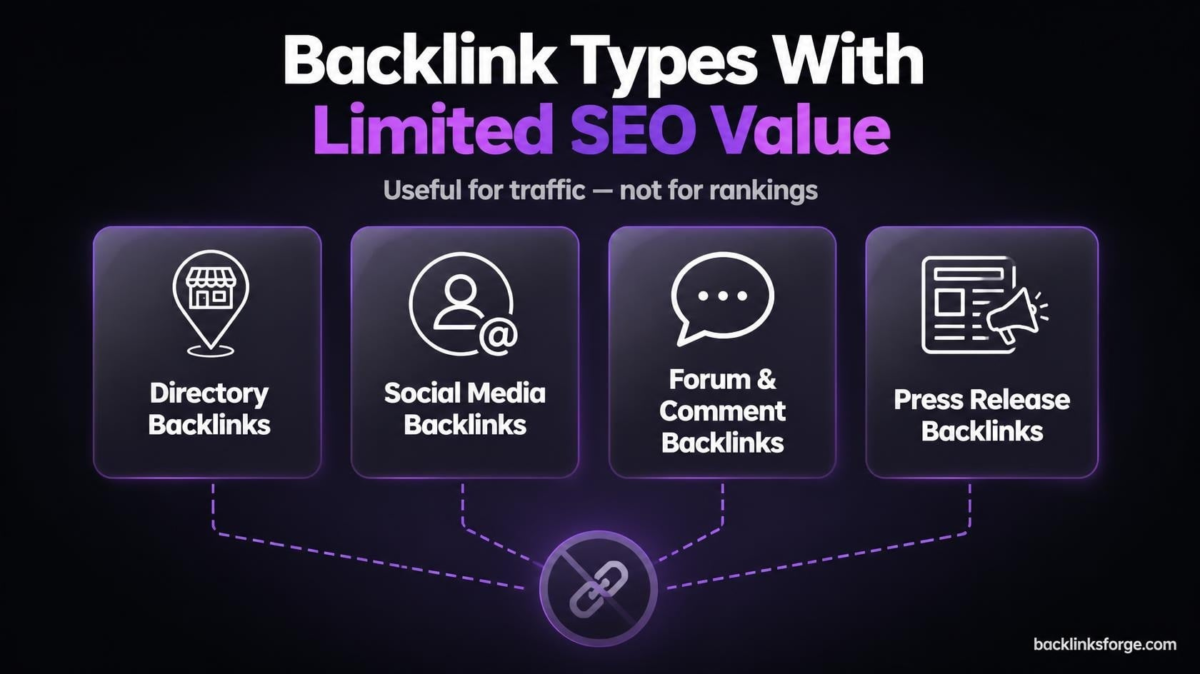
Not every mention online translates into ranking power, but many of these still offer indirect benefits like referral traffic and brand visibility.
Directory Backlinks
Listings on business directories (Google Business Profile, Yelp, Trustpilot, niche directories) rarely move rankings directly, but they reinforce NAP (name, address, phone) consistency for local SEO and can drive referral traffic.
Social Media Backlinks
Links from social media profiles and posts are almost always nofollow, so they don’t pass direct ranking authority. However, they contribute to brand signals, referral clicks, and content discoverability — indirectly supporting SEO.
Forum and Comment Backlinks
Backlinks placed in blog comments or forum discussions are typically marked nofollow or UGC and carry minimal direct SEO weight. Used sparingly and only where genuinely relevant, they can still generate referral traffic.
Press Release Backlinks
Press release distribution generates backlinks, but most reputable networks apply nofollow tags to these links per Google’s guidance. Their real value lies in visibility and potential pickup by real editorial outlets — not the direct link itself.
Backlink Types That Can Hurt Your SEO
Paid Dofollow Links (Undisclosed)
Buying dofollow backlinks without a sponsored or nofollow tag directly violates Google’s link scheme policies and risks manual penalties or ranking suppression.
Private Blog Network (PBN) Links
PBNs are networks of expired or low-quality domains built purely to funnel artificial link equity to a target site. Google’s algorithms and manual reviewers are highly effective at detecting PBN footprints, and using them puts an entire domain’s visibility at risk.
Spammy or Excessive Reciprocal Links
Small amounts of natural reciprocal linking are normal, but large-scale “link exchange” schemes designed purely to manipulate rankings are flagged as manipulative link patterns.
Hidden or Widget Backlinks
Embedding invisible or hidden links inside widgets, themes, or plugins that other sites install is considered a deceptive link scheme and violates search engine guidelines.
Backlinks vs. Internal Links: Don’t Confuse the Two
It’s worth clarifying a common point of confusion: a backlink always comes from an external, separate domain, whereas an internal link connects two pages within the same website. Both matter for SEO — internal links help search engines crawl and understand your site architecture while distributing existing authority across pages — but only external backlinks build your site’s overall domain authority and off-page trust signals. A strong SEO strategy uses internal linking to support on-page structure while dedicating outreach and content efforts specifically toward earning external backlinks.
How to Evaluate Backlink Quality
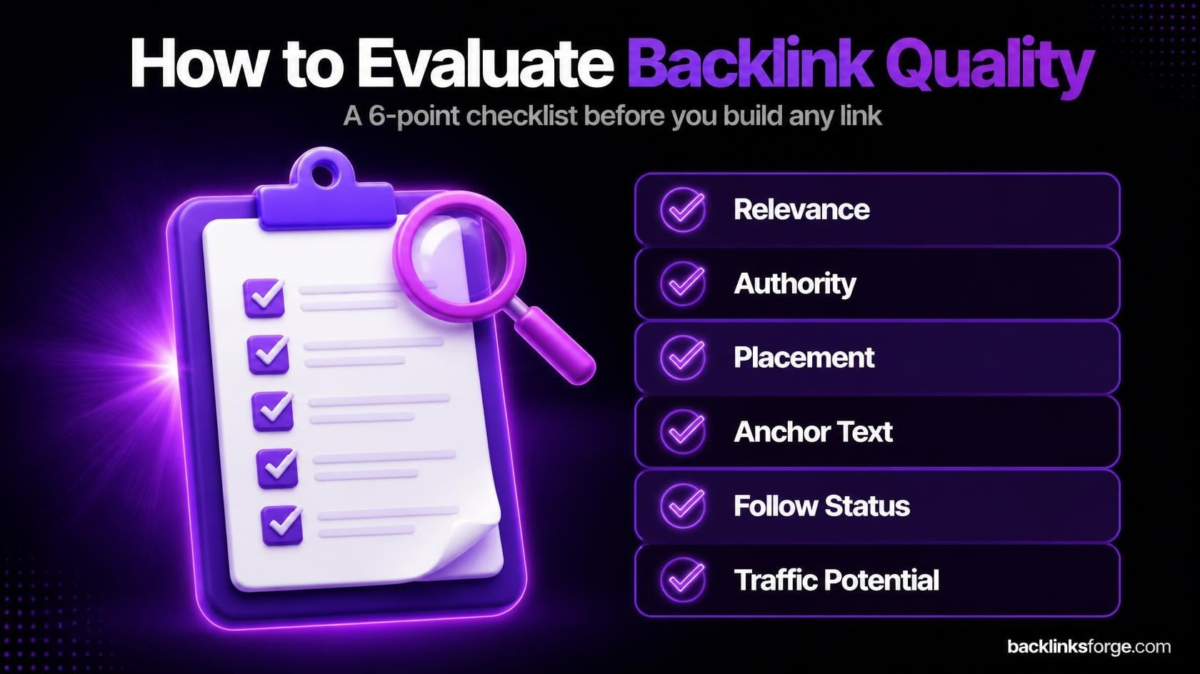
Before pursuing any backlink type, run it through this checklist:
- Relevance: Is the linking site topically related to your niche?
- Authority: Does the referring domain have strong domain authority/rating and real organic traffic?
- Placement: Is the link contextual, placed naturally within content — not stuffed in a footer or sidebar?
- Anchor text: Is the anchor text natural and varied, rather than exact-match keyword stuffing?
- Follow status: Is it dofollow (for ranking power) or nofollow (for traffic and diversity)?
- Traffic potential: Could this link realistically send real visitors, not just search engine crawlers?
A backlink profile built on a healthy mix of editorial links, well-placed guest posts, niche edits, and digital PR mentions — rather than mass low-quality links — is what consistently moves rankings in 2026’s search landscape.
It also helps to regularly audit your existing backlink profile using tools like Google Search Console, Ahrefs, Semrush, or Moz. A backlink audit reveals your ratio of dofollow to nofollow links, flags toxic or spammy referring domains that could be dragging down your site’s trust score, and highlights gaps compared to competitor backlink profiles. Disavowing genuinely harmful links — while leaving neutral, low-authority links alone — keeps your profile clean without over-correcting and accidentally removing links that still contribute referral value.
Building a Smarter Backlink Profile
Understanding these backlink types is only half the job — acquiring them consistently, from genuinely relevant and authoritative sites, is where most link building efforts fall apart. Whether you’re targeting editorial placements, guest post opportunities, or niche edits on aged domains, the strategy should always prioritize relevance and quality of the referring domain over sheer link count.
At BacklinksForge, every guest post and niche edit placement goes through a manual vetting process before it’s pitched to a client — we check the referring domain’s organic traffic trend, topical relevance to the client’s niche, existing link profile, and editorial standards, rather than relying on domain authority metrics alone. A site can carry an impressive DA score and still be a poor fit if it publishes off-topic content or shows signs of a declining traffic trend. This manual, relevance-first approach is slower than bulk link-buying, but it’s what keeps a client’s backlink profile resilient across Google’s core updates instead of vulnerable to them.
About the Author
This guide is written and maintained by the content team at BacklinksForge, a guest posting and link-building agency that works directly with website owners and marketing teams to build white-hat backlink profiles through editorial guest posts, niche edits, and outreach-based link acquisition. For questions about a specific link building strategy, reach out at Business@backlinksforge.com.
Frequently Asked Questions
What is the most valuable type of backlink? Editorial dofollow backlinks from topically relevant, high-authority websites are generally considered the most valuable, since they represent a genuine third-party endorsement search engines trust.
Are nofollow links worth pursuing? Yes. While they don’t pass direct link equity, nofollow links contribute to a natural, diverse backlink profile and can drive real referral traffic and brand visibility.
Do guest posts still work for SEO in 2026? Yes, when done correctly. Guest posting on relevant, high-quality sites with genuine editorial standards remains an effective and scalable link building method — it’s only mass, low-quality guest posting on irrelevant sites that risks penalties.
How many backlinks does a website need to rank? There’s no fixed number. Rankings depend more on the relevance and authority of referring domains than on total backlink count — a handful of high-quality links often outperforms hundreds of weak ones.
Final Thoughts
Not all backlinks are created equal. From dofollow and nofollow attributes to editorial, guest post, niche edit, and digital PR link types, each category plays a different role in your off-page SEO strategy. The websites that consistently rank well aren’t the ones with the most links — they’re the ones with the most relevant, authoritative, and naturally earned backlink profile. Focus your link building efforts on quality, relevance, and diversity of link types, and the rankings will follow.