
Two backlinks can look identical on a web page, yet one can lift your Google rankings while the other does very little for them. The difference is a single piece of HTML. In this guide, we’ll walk through dofollow vs nofollow examples, show the actual code, and explain when each link type is worth your time.
What Is the Difference Between Dofollow and Nofollow Links?
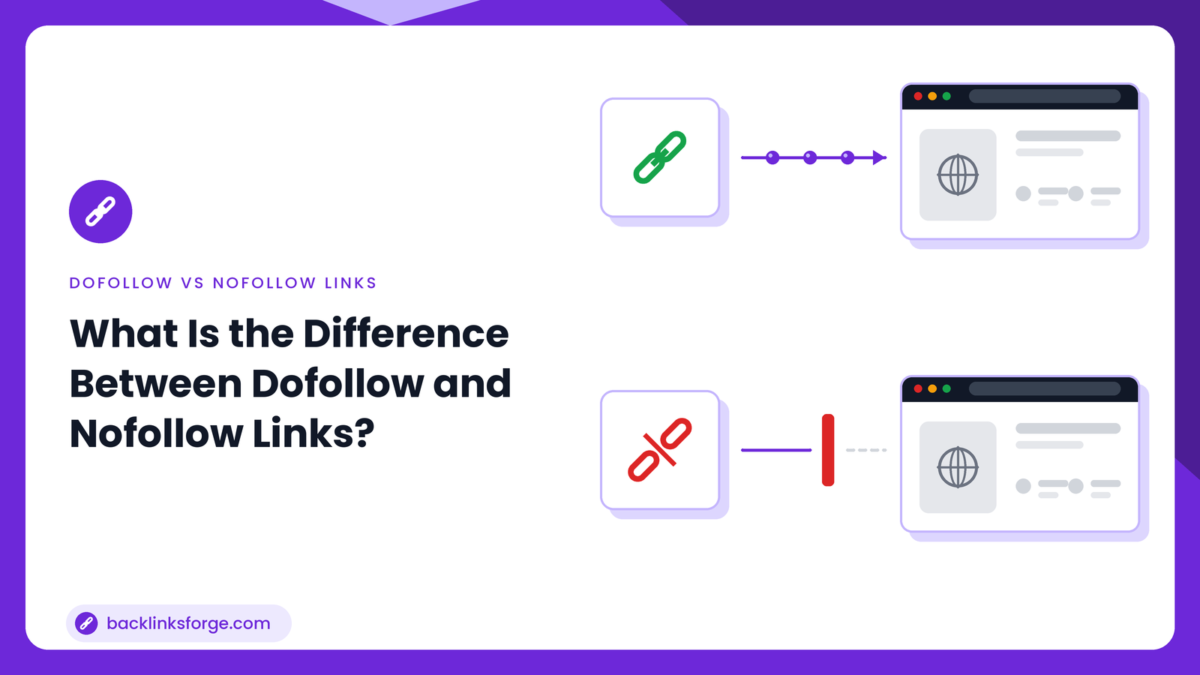
A dofollow link is a normal hyperlink with no restrictions. Search engines can follow it, and Google treats it as an endorsement that passes ranking signals to the page it points to. A nofollow link carries a rel="nofollow" tag, which tells Google the publisher isn’t vouching for the destination.
Dofollow Link Example (HTML Code)
html
<a href="https://example.com/seo-guide">Read the SEO guide</a>There’s no special attribute here. A link with no restriction is dofollow by default.
Nofollow Link Example (HTML Code)
html
<a href="https://example.com/seo-guide" rel="nofollow">Read the SEO guide</a>The only change is rel="nofollow", and that one attribute changes how search engines treat the link.
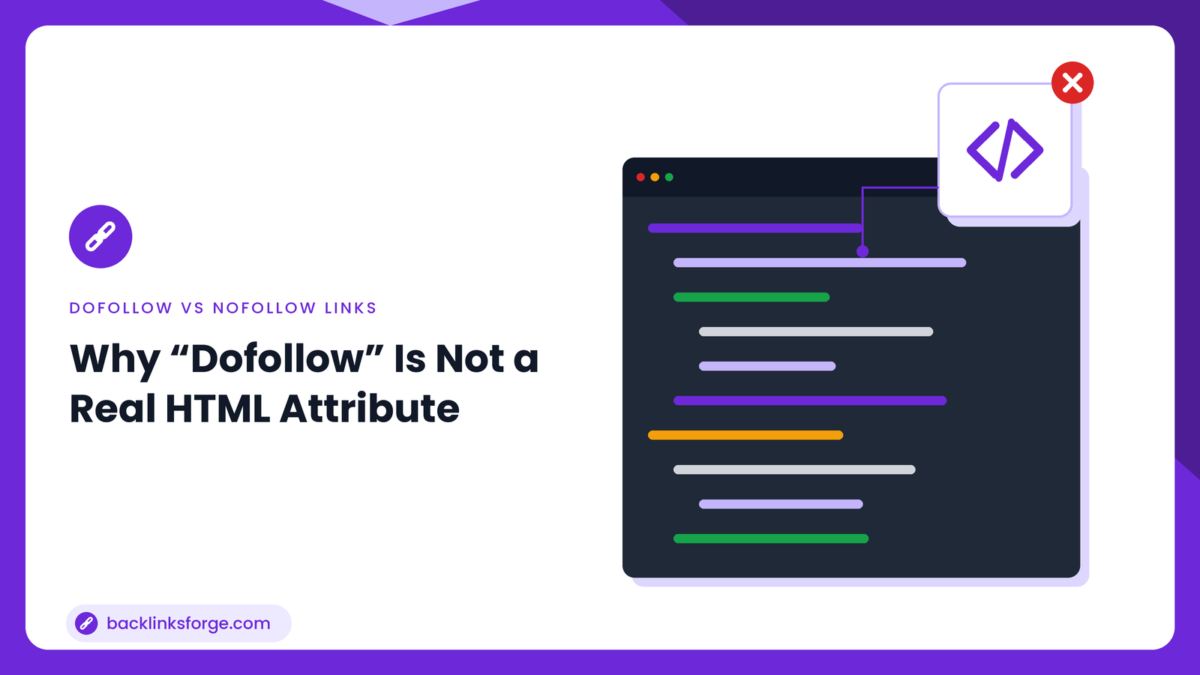
Why “Dofollow” Is Not a Real HTML Attribute
Many beginners try to write rel="dofollow" in their code. It doesn’t exist. “Dofollow” is just SEO slang for any link that lacks a nofollow, sponsored, or ugc attribute. Adding rel="dofollow" does nothing, so leave it out.
How Link Equity and PageRank Flow Between Pages
What Is Link Juice?
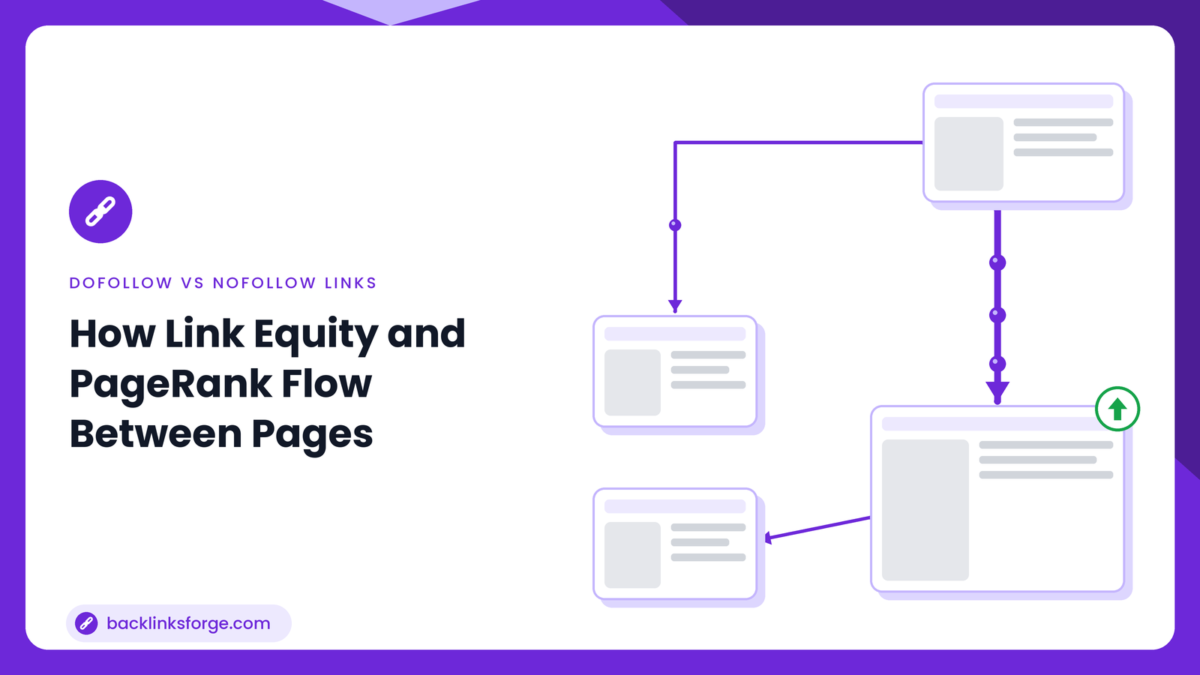
Link juice, or link equity, is the ranking value one page passes to another through a hyperlink. Google’s original PageRank system worked on this idea: pages that earn links from trusted pages become more trusted themselves. A dofollow backlink from a respected website can therefore strengthen your page’s authority.
Why Nofollow Became a “Hint” for Google
Nofollow was created in 2005 to fight comment spam. Since 2019, Google has treated it as a hint rather than a strict command, which means Google may still use a nofollow link as a signal for crawling or ranking in some cases. Don’t build a strategy around that, but it explains why nofollow links aren’t completely worthless.
Rel Attributes Beyond Nofollow: Sponsored and UGC
Google introduced two more link attributes to describe what a link actually is. You can read the details in Google’s official announcement on nofollow, sponsored, and ugc attributes.
rel=”sponsored” Example
Use this for paid placements, ads, and affiliate or sponsorship deals:
html
<a href="https://brand.com/product" rel="sponsored">Try this product</a>rel=”ugc” Example
Use this for user-generated content such as comments and forum posts:
html
<a href="https://someblog.com" rel="ugc">My website</a>You can also combine values, like rel="sponsored nofollow". For most site owners, the rule is simple: if you were paid for the link, mark it sponsored; if a visitor posted it, mark it ugc.
Real-World Dofollow and Nofollow Link Examples
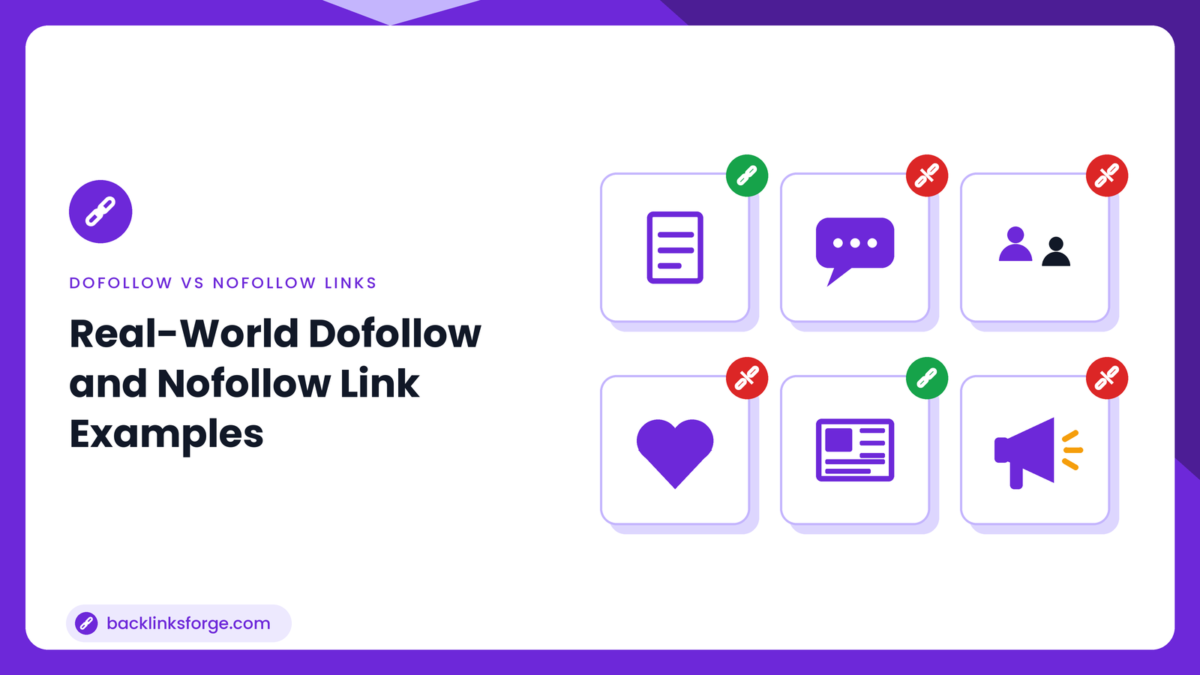
Code is useful, but seeing where these links show up in practice makes the difference easier to spot.
Common Dofollow Link Examples
- Editorial mentions: A journalist or blogger links to your study because they found it useful.
- Guest post backlinks: A relevant, contextual link inside an article you wrote for another website.
- Resource page links: A “best tools” or “helpful resources” page that lists your site.
- Internal links: Links between pages on your own site, which should almost always stay dofollow.
Common Nofollow Link Examples
- Blog comments: Most platforms add nofollow or ugc automatically.
- Forum signatures and posts: Community links are usually tagged as user-generated.
- Paid ads and sponsored posts: These should be marked sponsored or nofollow.
- Social media profiles and posts: Major social platforms generally mark outbound links as nofollow.
- Wikipedia references: External links on Wikipedia carry nofollow.
Are Dofollow Links Better Than Nofollow Links for SEO?
For passing ranking value, yes. A dofollow backlink from a relevant, trustworthy site is one of the strongest signals you can earn. But “better” depends on your goal.
Do Nofollow Backlinks Still Have Value?
They do. A nofollow link on a busy forum or a popular publication can still send referral traffic, build brand awareness, and lead to future dofollow mentions. People who discover you through a nofollow link may later link to you naturally.
Why a Healthy Backlink Profile Needs Both
If every backlink pointing to your site is dofollow, it can look unnatural. Real websites collect a mix of link types because real people share content in different places. A balanced backlink profile looks organic, and that is exactly the kind of profile Google expects to see.
How to Check Whether a Backlink Is Dofollow or Nofollow
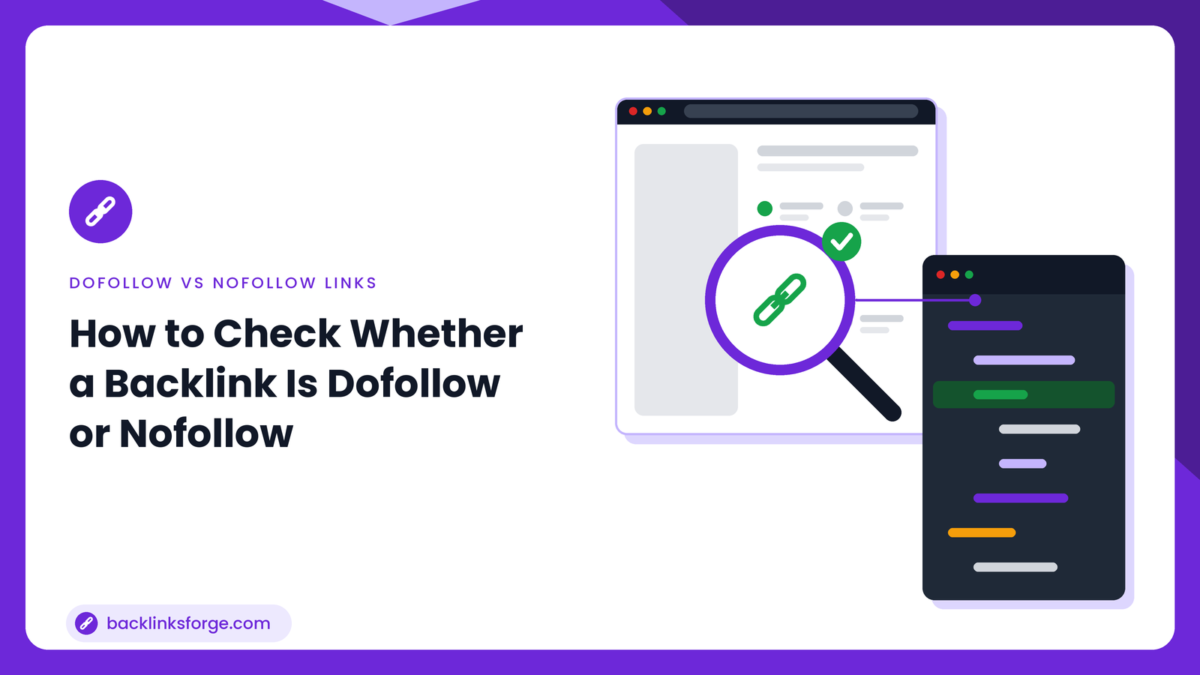
Method 1: Inspect the Page
- Open the page that contains the link.
- Right-click the link and choose Inspect.
- Look at the
<a>tag in the code. - If you see
rel="nofollow",rel="sponsored", orrel="ugc", it’s not a standard dofollow link. If there’s no rel attribute, it’s dofollow.
Method 2: Use a Browser Extension or Backlink Checker
SEO extensions highlight nofollow links on a page in a different color, which saves time when you’re auditing many links. Backlink tools like Ahrefs, Semrush, and Mangools LinkMiner can also filter your backlinks by dofollow or nofollow status.
How to Earn High-Quality Dofollow Backlinks Safely
Knowing the difference is only useful if you can actually get the right links. These are the approaches that hold up over time.
Guest Posting on Relevant Websites
Publishing genuinely helpful articles on websites in your niche remains one of the most reliable ways to earn contextual dofollow links. The key is relevance: a link from a site your audience already reads is worth far more than a random placement. If you’d rather not handle outreach yourself, a professional guest post link building service can find relevant sites and manage the process for you.
Creating Link-Worthy Content
Original research, useful tools, clear statistics pages, and in-depth guides give other sites a reason to link to you without being asked.
Resource Page and Broken Link Outreach
Find resource pages in your industry, or pages with dead links, and suggest your content as a helpful replacement. It takes effort, but the links you earn are editorial and relevant.
Common Dofollow and Nofollow Mistakes to Avoid
- Buying dofollow links without disclosure. Paid links that pass PageRank go against Google’s spam policies. Paid placements should be marked sponsored.
- Nofollowing all your internal links. This can hurt how Google crawls your site. Keep internal links dofollow unless there’s a specific reason.
- Linking to spammy sites with dofollow links. Use nofollow if you can’t vouch for a destination.
- Chasing only dofollow links. Ignoring nofollow opportunities means missing traffic and brand exposure.
- Adding
rel="dofollow". It isn’t a real attribute, so it has no effect.
Frequently Asked Questions
Are nofollow links bad for SEO?
No. They don’t pass the same ranking value, but they won’t hurt you, and they add diversity, traffic, and visibility.
Should I make my outbound links nofollow?
Not all of them. Link with a normal dofollow to trusted, relevant sources, and use nofollow, sponsored, or ugc when the link is paid, user-submitted, or untrusted.
Can Google ignore a nofollow tag?
Yes. Since it’s treated as a hint, Google may choose to use a nofollow link in some situations, but you shouldn’t count on it.
Final Thoughts: Dofollow vs Nofollow Links in 2026
Dofollow links pass authority and directly support your rankings. Nofollow, sponsored, and ugc links protect your site from spam, keep you compliant with Google’s guidelines, and still bring visibility. The best strategy is to earn quality dofollow backlinks from relevant websites while welcoming nofollow mentions as part of a natural link profile