
Know what a guest post link should cost before you set your link building budget.
“How much does a guest post cost?” is one of the most common questions in link building, and the honest answer is: it depends. A link on a small blog can cost less than a lunch. A link on a major publication can cost thousands. Between those two ends, prices are shaped by authority, niche, traffic and who you buy from.
This guide pulls together 2026 pricing data from several industry studies so you can see what a fair price looks like, why prices differ so much, and how to get better value from your budget.
How Much Does a Guest Post Cost Per Link?
Across large marketplace studies in 2026, most guest posts land in the $300 to $500 range. Here are the headline averages:
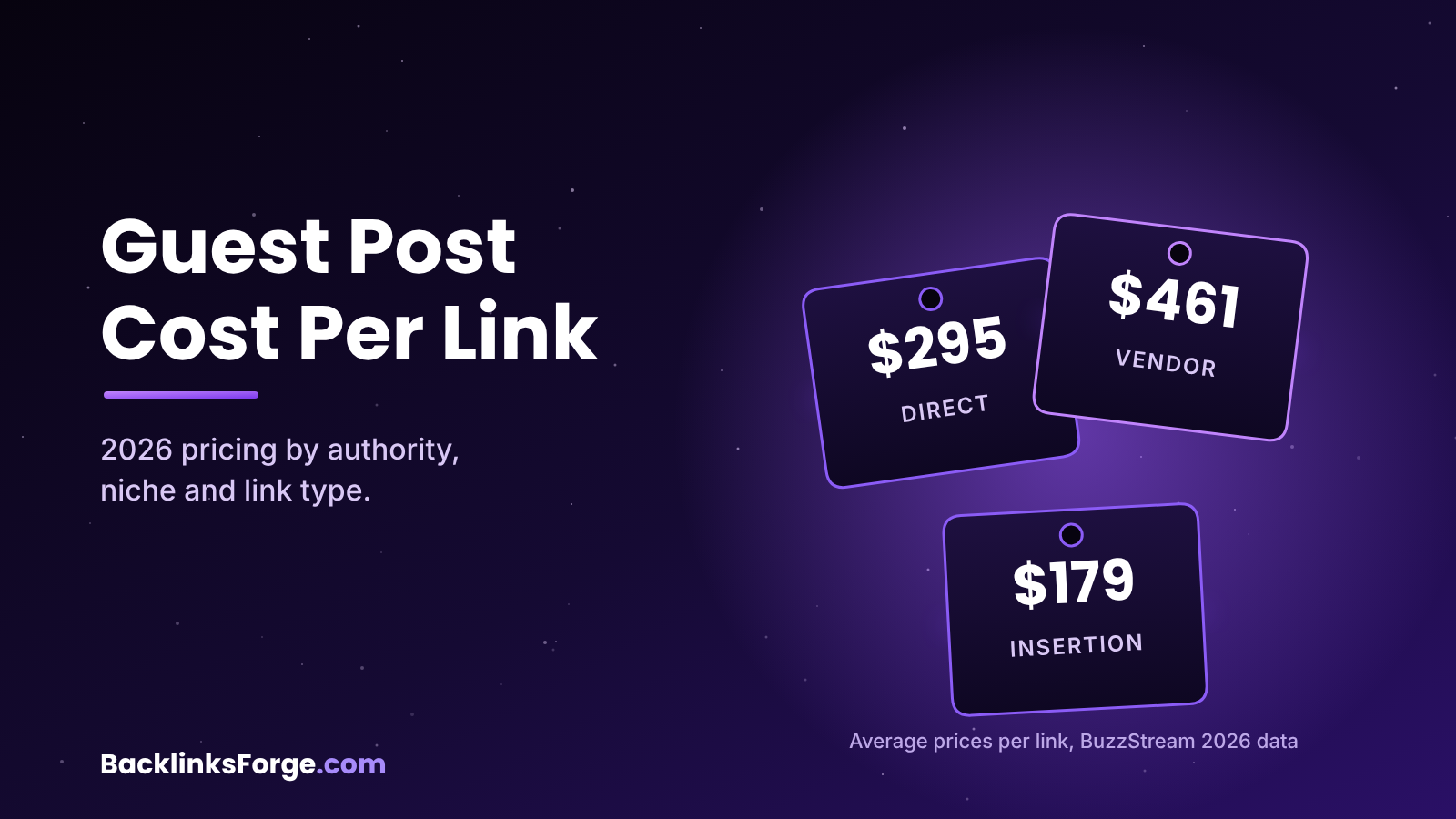
- Direct from the website: about $295 per guest post
- Through a vendor or agency: about $461 per guest post
- Link insertion into an existing article: about $179 per link
These figures come from BuzzStream’s 2026 guest post cost study, which analysed pricing across hundreds of thousands of sites in a major link marketplace. Other studies report different averages. One 2026 roundup puts the average closer to $365, and another study of transactions found buyers often pay far less than sellers’ list prices. Treat all averages as a guide, not a fixed rate.
Guest Post Price by Domain Rating (DR)

Authority is the biggest single factor in price. The higher a site’s Domain Rating (Ahrefs’ authority metric), the more it usually costs.
Average guest post price by DR, based on Adsy’s 2026 analysis.
| DR range | Average guest post price |
|---|---|
| DR 1-10 | about $238 |
| DR 11-20 | about $351 |
| DR 41-50 | about $462 |
| DR 71-80 | about $1,008 |
| DR 81-90 | about $1,371 |
Source: Adsy 2026 analysis. Only selected DR bands are shown.
BuzzStream’s vendor data shows the same pattern: roughly $200 at the bottom (DR 0-9) and up to about $3,000 for DR 80+ sites. Prices rise slowly through the middle ranges, then climb sharply once you pass DR 70.
What this means for you: a DR 40-50 site that is relevant to your niche is often the best balance of cost and impact. DR 70+ placements can be powerful, but they cost several times more.
What Affects the Price of a Guest Post?
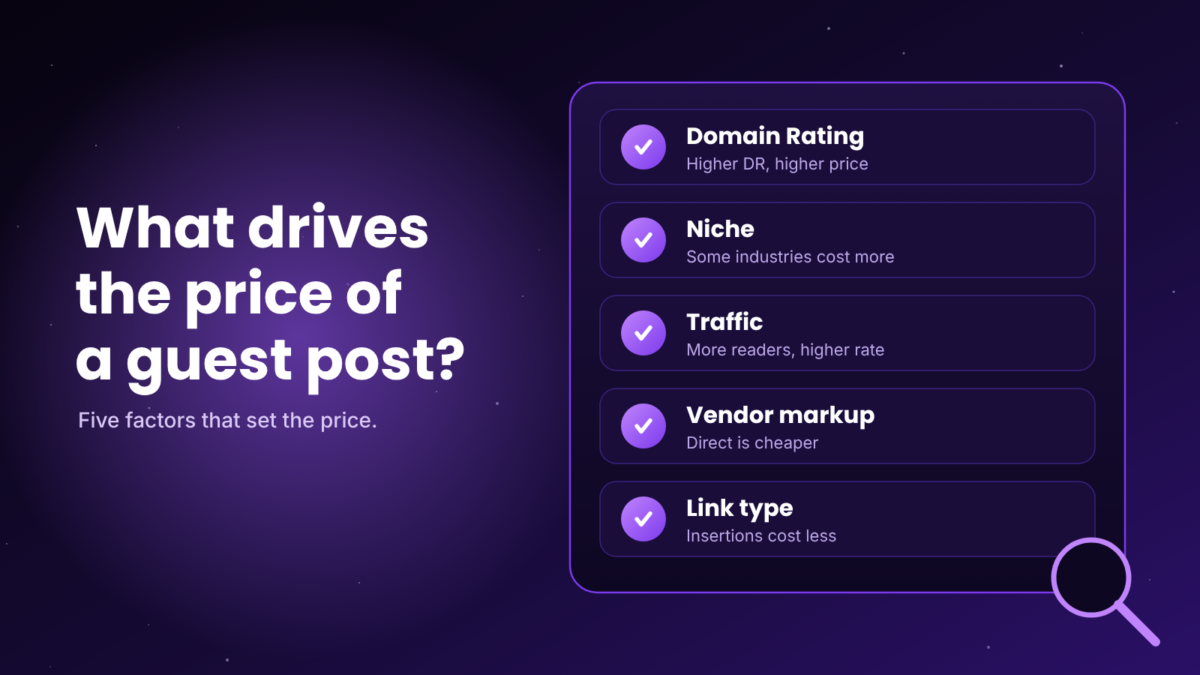
Five factors that set the price of a guest post.
1. Domain Rating and authority
As the chart shows, stronger sites charge more. Authority is a proxy for how much trust the link may pass.
2. Niche
Some industries cost more than others. In BuzzStream’s data, sports and news sites were among the most expensive, while health, wellness and ecommerce sat lower. Risky or heavily regulated niches such as gambling are priced much higher at the quality end.
3. Organic traffic
Sites with more real readers charge more. Adsy’s data suggests prices rise with traffic, but the increase slows down once a site passes about 10,000 monthly visitors.
4. Who you buy from
Buying directly from the site owner is usually cheaper. Vendors and agencies add a markup for outreach, vetting, content and support. BuzzStream’s averages ($295 direct and $461 through vendors) show that gap clearly.
5. Type of placement
A link insertion (adding your link to an existing article) costs less than a full guest post because no new article is written. A guest post gives you more control over the content and anchor text.
List Price vs What Buyers Actually Pay
Sellers’ asking prices are often higher than the final price. Adsy’s February 2026 data found that sellers listed links at about $929 on average, while buyers typically paid about $207. In other words, many placements are negotiable, especially on lower-authority sites.
That does not mean you should always chase the cheapest option. It means you should compare offers, ask for site metrics and avoid paying a premium without a reason.
Cheap Links vs Quality Links
Price alone does not tell you whether a link is good. The same BuzzStream study found that most sites selling guest posts are low quality, with a low average Domain Rating and very little organic traffic. A cheap link on a site like that may not help your rankings, and in some cases can hurt.
Before you buy, check:
- Relevance: does the site cover your niche?
- Real traffic: does it get genuine organic visitors?
- Editorial standards: does it review and publish quality content?
- Clean link profile: is it free of obvious link-selling, spam and unrelated outbound links?
Google’s link spam policies explain which link practices can lead to penalties, and it is worth reading before you invest in any paid placement.
How to Get Better Value From Your Link Building Budget
- Prioritise relevance over raw DR. A relevant DR 45 site often beats an unrelated DR 70 site.
- Mix link types. Use guest posts for key pages and link insertions where a cheaper option fits.
- Compare direct and vendor prices. Know what the markup buys you, such as vetting, content and reporting.
- Ask for metrics first. Look at DR or DA, traffic, niche and link type before paying.
- Check live examples. Review past placements on the site to confirm the quality.
- Spread links across pages. Do not point every link at your homepage.
- Plan for the long term. Link building works gradually, so a steady monthly budget usually works better than one big burst.
How to Choose a Guest Post Provider
Look for a provider that:
- Shows the list of sites with their metrics before you pay
- Matches sites to your niche
- Uses white-hat methods and real editorial standards
- Delivers live URLs you can verify
- Explains pricing clearly, with no hidden fees
At BacklinksForge, our publisher list shows the key details for each site so you can decide before you commit. You can view it here: BacklinksForge Publisher List.
Frequently Asked Questions
What is the average cost of a guest post in 2026? Most studies put the average between about $295 and $461 per guest post, depending on whether you buy directly or through a vendor.
Why are some guest posts so cheap? Often because the site has low authority, little traffic or weak editorial standards. Very low prices are a reason to check quality carefully.
Why are some guest posts so expensive? High-authority sites with large audiences, strict editorial review and strong brand value charge more. Prices rise sharply above DR 70.
Is a link insertion cheaper than a guest post? Yes. Link insertions average about $179 compared with about $295 to $461 for a guest post, but they give you less control over the surrounding content.
Does a higher price guarantee better rankings? No. A higher price usually reflects authority and traffic, but results also depend on relevance, content quality and your own website. No link provider can guarantee rankings.
Final Thoughts
The cost of a guest post per link can range from under $100 to several thousand dollars, but most buyers will spend somewhere between $300 and $500 for a solid placement. The right price is the one that matches the site’s relevance, real traffic and quality, not just its DR.
Compare options, ask for metrics and focus on links that make sense for your niche. If you want help choosing the right sites, visit BacklinksForge.com or contact us at Business@backlinksforge.com or on WhatsApp at +92 328 9448396.
Disclaimer: This article is for general informational purposes. Pricing figures are drawn from publicly available 2026 studies, including BuzzStream and Adsy analyses, and are averages that vary by study, niche and provider. BacklinksForge has no affiliation with BuzzStream, Adsy, Google or any other third party mentioned. Prices and results vary, and no specific outcome is guaranteed.