
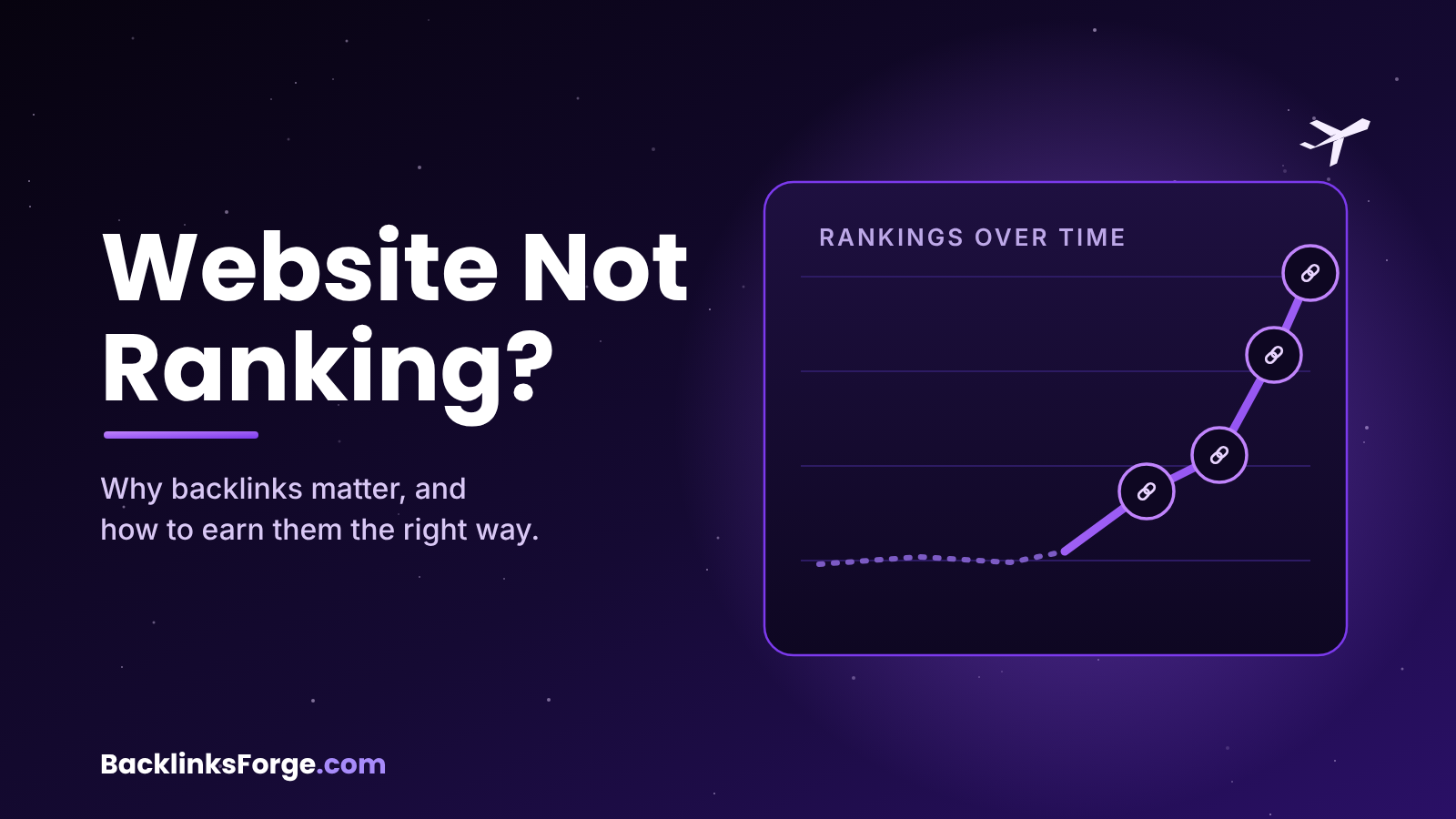
Backlinks are one of the most important signals that help a website earn trust and rank.
You published your pages, optimised your titles and waited. Weeks later, your website is still nowhere on Google. It is a frustrating place to be, and it is more common than most site owners admit.
There is rarely a single reason a site does not rank. But for many sites, especially newer ones, one of the biggest missing pieces is backlinks. In this guide you will learn how to check what is holding your site back, why backlinks matter, and how to build them safely.
Why Is My Website Not Ranking?
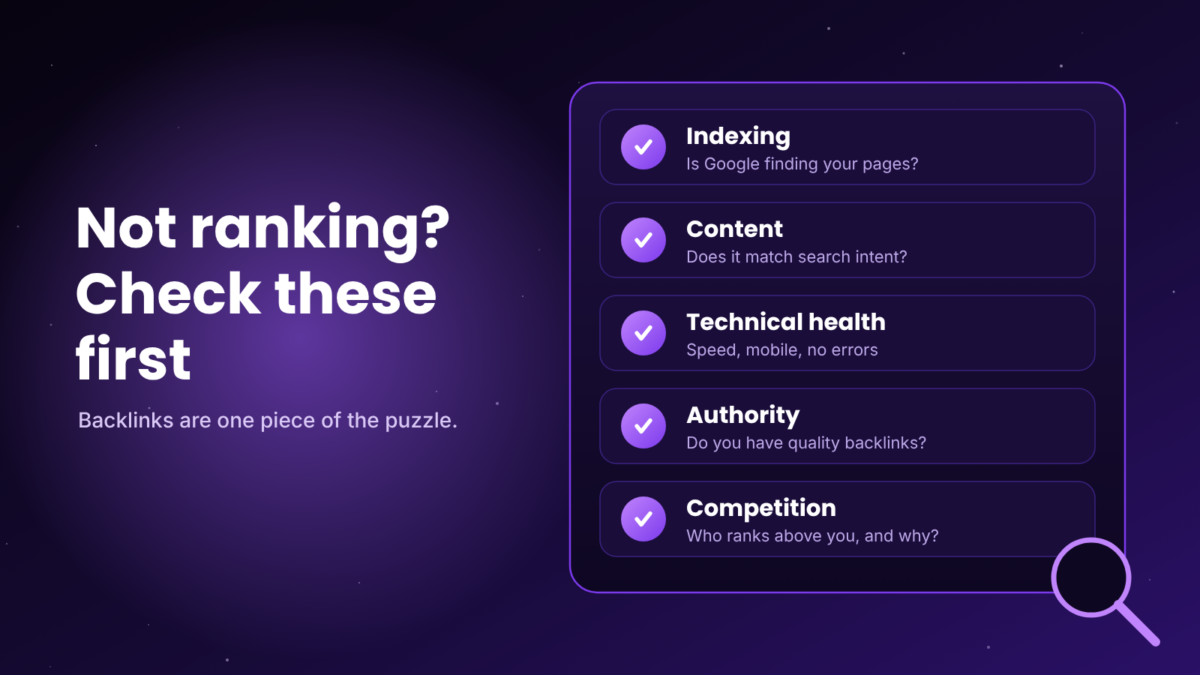
Before you invest in links, rule out the basics. Backlinks help, but they cannot fix a page that Google cannot find or that does not answer what people are searching for.
Backlinks are one piece of the puzzle. Check these areas first.
1. Your pages are not indexed
If Google has not indexed a page, it cannot rank. Check Google Search Console’s page indexing report, and look for “noindex” tags or blocked pages in your robots.txt file.
2. Your content does not match search intent
A page can be well written and still miss what searchers want. If people searching a keyword expect a guide and you published a sales page, you will struggle. Look at the pages that already rank and see what format and depth they offer.
3. Technical problems
Slow loading, poor mobile experience, broken pages and duplicate content can all hold a site back. Google’s SEO Starter Guide is a good reference for the basics.
4. Your site has little authority
If your site is new or small, search engines have few signals that tell them to trust it. This is where backlinks come in.
5. Your competition is much stronger
For competitive keywords, you may be up against sites with years of content and hundreds of linking domains. Ranking against them with a few pages and no links is unlikely.
What Are Backlinks and Why Do They Matter?
A backlink is a link from another website to yours. Search engines treat quality links as a vote of confidence: if respected sites point to your page, it is probably worth showing. Backlinks help in several ways:
- Authority and trust: links from relevant, established sites strengthen your credibility.
- Discovery: search engines find and crawl your pages more easily when other sites link to them.
- Referral traffic: readers of the linking page can click through to you.
- Competitive ranking: for tougher keywords, your link profile often has to compete with those of the pages already ranking.
Important: links are only one of many ranking factors, and quality matters far more than quantity. A few relevant links from real websites are worth more than hundreds from spammy ones.
Signs You Probably Need Backlinks
Your site may need a link building effort if:
- Your content is solid and your technical setup is healthy, but you still sit on page 3 or beyond
- Competitors ranking above you have many more referring domains
- Your site is new and has almost no links pointing to it
- You rank for low-competition terms but not for the keywords that bring customers
- Your pages are indexed, but get few impressions in Search Console
A simple check: search your target keyword, open the top three results in a backlink tool, and compare their referring domains with yours. If the gap is large, links are likely part of the problem.
How to Get Quality Backlinks
Five-step backlink plan: audit, create, outreach, earn and track
A simple backlink plan, from audit to results.
1. Guest posting
Writing useful articles for relevant websites in your niche, with a natural link back to your site, is one of the most controllable ways to earn links. Choose sites with real readers and editorial standards, not sites that publish anything.
2. Create link-worthy content
Original research, detailed guides, free tools and clear data tend to attract links on their own. Make pages other people want to cite.
3. Niche edits and link insertions
Some site owners will add your link into an existing relevant article. This can be cheaper than a full guest post, but relevance still matters.
4. Digital PR and mentions
Expert comments, interviews and news-worthy stories can earn links from publications and industry sites.
5. Resource pages and roundups
Many sites list helpful resources or “best of” lists. If your content fits, you can pitch it politely.
6. Fix and reclaim links
Look for brand mentions without links and ask for a link. Also fix broken pages that already have backlinks pointing to them.
What to Avoid
Not every link helps. Some can do harm. Google’s link spam policies describe practices that can lead to penalties. Stay away from:
- Link farms and private blog networks (PBNs)
- Mass-bought, low-quality links
- Irrelevant sites, such as casino or adult sites linking to a business blog
- Over-optimised anchor text, such as the same exact keyword every time
- Promises of guaranteed rankings
How Many Backlinks Do You Need?
There is no magic number. It depends on your competition. Look at the pages ranking for your target keyword and compare their number of referring domains, then build steadily toward a competitive profile. A balanced approach is usually better than a sudden burst of links, which can look unnatural.
How Long Until You See Results?
Link building is gradual. Pages can take days or weeks to be indexed and re-evaluated, and ranking changes often take a few months, depending on competition, content quality and your site’s overall health. Be wary of anyone promising overnight results.
How to Track Your Progress
Check these every month:
- Keyword rankings for your target pages
- Impressions, clicks and average position in Google Search Console
- New referring domains and backlinks
- Referral traffic from linking pages
- Leads, signups or sales
If one page is improving, build more links and internal links toward it.
Get Help With Quality Link Building
If you have fixed the basics and still need links, a trusted guest post and link building service can save time on research, outreach and placement. At BacklinksForge, our publisher list shows the key details of each site, so you can choose placements that fit your niche before you commit: BacklinksForge Publisher List.
Frequently Asked Questions
Why is my new website not showing on Google? New sites often take time to be crawled and indexed, and they start with little authority. Make sure your pages are indexed in Search Console, publish useful content and start building quality links.
Can I rank without backlinks? Yes, for low-competition keywords. For competitive terms, backlinks are usually needed.
Are backlinks the only reason a site does not rank? No. Indexing, content, technical issues, search intent and competition all matter. Check them before spending on links.
Are paid backlinks safe? Paid links that are placed purely to manipulate rankings can break Google’s guidelines. Guest posts on relevant sites with real editorial standards are a safer approach, as long as the content is genuinely useful and the link is natural.
How many backlinks do I need to rank on page one? It depends on the keyword and the pages already ranking. Compare their referring domains with yours to set a realistic target.
Final Thoughts
If your website is not ranking, start by checking indexing, content and technical health. If those are fine and your competitors have far stronger link profiles, backlinks are probably the missing piece. Focus on relevant, high-quality links from real websites, build them steadily and track the results.
Need help getting started? Visit BacklinksForge.com or contact us at Business@backlinksforge.com or on WhatsApp at +92 328 9448396.
Disclaimer: This article is for general informational purposes and draws on publicly available guidance from Google Search Central and common industry practice. BacklinksForge has no affiliation with Google or any other third party mentioned. Ranking results vary by site, niche and competition, and no specific outcome is guaranteed.